Executive Summary
Addressing wear and tear in hybrid retail-hospitality spaces through moisture-resistant millwork and durable materials.
Spatial Philosophy & Architectural Narrative
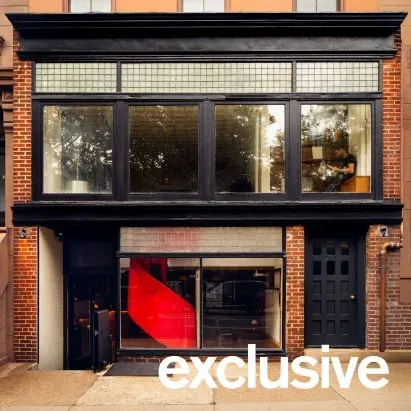
The core of hybrid commercial spaces lies in the smooth transition of functional circulation and the gradual transition of sensory experiences. This project integrates retail display, a vinyl hi-fi bar, and social dining within a single venue. The design utilizes expansive glass facades to guide natural light, while a high-saturated red spiral steel staircase serves as a visual focal point, creating vertical circulation. In terms of spatial hierarchy, the layout transitions from the open retail zone at the front to the intimate vinyl listening area and bar at the rear. The lighting design utilizes adjustable warm-color temperature systems, complementing the cool marble and warm custom millwork. This material contrast enhances the brand narrative through the compression and release of spatial volumes, combining retail and hospitality acoustics to prolong patron dwell time and generate sustainable community asset value.
Luxury FF&E Material Engineering & Joinery Breakdown
In premium hybrid hospitality projects, FF&E engineering and material specifications dictate long-term asset value. For custom millwork, engineering standards require F1-grade moisture-resistant plywood under CNS 1349, with a formaldehyde emission average below 0.3 mg/L, providing structural stability and bending resistance. Hardware such as hinges and drawer slides must comply with DIN EN 15570 Level 3, certified for 200,000 open-and-close cycles to withstand heavy daily operational impacts. For metal trim and transitions, PVD-coated SUS304 stainless steel with a thickness of 1.2 mm is specified. The PVD surface hardness must exceed HV 800 to ensure scratch resistance and color retention. A 0.5 mm reveal or relief joint must be detailed at the transition between metal trim and wood panels to accommodate thermal expansion and contraction. Regarding natural stone execution, the 20 mm thick marble used for the bar counter must be fully backed with high-tensile glass-fiber mesh and vacuum-impregnated with epoxy resin. The flexural strength of the stone must meet ASTM C99 standards (minimum 6.9 MPa) to prevent structural cracking under concentrated loads or dynamic impacts. Upholstered seating requires commercial-grade fabrics passing the Martindale rub test with a minimum of 40,000 cycles. For life safety compliance, both the textile and the underlying polyurethane foam must adhere to BS 7176 Medium Hazard standards, passing the Crib 5 flame retardancy test. All veneered millwork panels utilize 0.6 mm natural wood veneer finished with multi-layer polyurethane (PU) lacquer to achieve commercial-grade resistance against heat, scratching, and chemical cleaning agents.
Hospitality Operations, Wear Analysis & TCO Model
Hybrid retail-hospitality venues undergo severe wear and tear. High-frequency touchpoints, including bar edges, baseboards, and audio display shelving, are prone to impact from luggage, cleaning equipment, and daily human contact. Substandard low-density fiberboards often deform or delaminate within the first 24 to 36 months of operation. To mitigate these lifecycle costs, commercial operators apply a Total Cost of Ownership (TCO) and Capital Expenditure (CapEx) defense model. Over a 7-year operational lifecycle, investing an extra 15% in initial CapEx for commercial-grade moisture-resistant plywood and heavy-duty hardware extends the maintenance and replacement interval from every 2 years to over 6 years. The calculation is defined as: TCO = C_initial + ∑(C_maintenance × P) - V_residual. Utilizing high-durability millwork reduces the maintenance frequency (P), delivering a 45% reduction in cumulative OpEx while minimizing operational downtime and associated revenue loss. Smart upfront CapEx allocation translates directly into superior asset yield.
Sunder Engineering Grounding & Subtropical Climate Defense
In subtropical island climates, high relative humidity (75-85% RH) poses significant challenges to millwork stability. Improper moisture control results in wood warping, delamination, and microbial growth. To mitigate these risks, factory fabrication must enforce a strict moisture content standard of 8-12% for all timber substrates and veneers. Upon cutting, all panels must receive double-sided polyurethane sealing coats to block moisture ingress from unbanded edges. Structurally, a 15-20 mm ventilation gap must be maintained between the rear panel and the structural wall, complemented by moisture-barrier membranes. Joinery must incorporate expansion tolerances based on local humidity expansion coefficients, leaving a minimum of 1.0 mm for movement. Utilizing five-axis CNC machinery for factory pre-fabrication ensures precise tolerances, shortening site installation time by 30% and minimizing exposure to fluctuating site humidity.
B2B Material & Inspection Specification Table
The following table outlines the material inspection and acceptance specifications for the hybrid commercial FF&E project:
| Component | Specification | Inspection Standard | Tolerance & Criteria |
|---|---|---|---|
| Structural Substrate | F1-grade moisture-resistant plywood, 8-12% MC | CNS 1349 / JIS A5908 | Formaldehyde emission ≤ 0.3 mg/L |
| Hardware Hinges | Soft-close 3D adjustable concealed hinges | DIN EN 15570 Level 3 | 200,000 cycles with zero sag |
| Metal Trim | SUS304 stainless steel, PVD titanium, 1.2 mm | ASTM A240 / HV 800 | Joint flatness tolerance ≤ 0.2 mm |
| Bar Counter Stone | 20 mm marble, fiberglass mesh & epoxy backing | ASTM C99 / ASTM C170 | Flexural strength ≥ 6.9 MPa |
| Upholstery Textile | Commercial-grade durable fabric, FR foam | Martindale / BS 7176 | ≥ 40,000 cycles, Crib 5 compliant |
During final handover, field supervisors must use digital calipers to verify that all joint tolerances remain within the specified range under stable indoor climate conditions.