In the complex, high-stakes development workflow of mega-hotels and premium commercial spaces, when the project enters the critical contracting phase, “Value Engineering (VE)” (Budget Optimization) is a harsh physical reality every developer and Chief Financial Officer absolutely must face.
However, a traditional, low-tier contract manufacturer’s understanding of budget optimization frequently devolves into crude, destructive “material downgrading”—blindly swapping high-end designer finishes for inferior laminates, and recklessly replacing vital rust-proof, moisture-resistant hardware with cheap, fragile alternatives. In the rigorous calculation models of B2B procurement strategy, this incredibly dangerous approach merely transfers today’s superficially saved Capital Expenditure (CapEx) directly into tomorrow’s massive, uncontrollable maintenance black hole.
Professional Value Engineering is absolutely not about ruthlessly lowering the quality floor; it is about establishing the most mathematically rational, long-term Total Cost of Ownership (TCO) for the owner through high-level “factory-side process restructuring” and militant “operational defense.”
Rejecting Material Downgrading, Restructuring Mechanics and Processes
The premium texture of high-end commercial spaces inherently stems from the physical weight and presence of authentic materials. The defensive baseline we hold firm is non-negotiable: absolutely never artificially alter the materials of the “visually exposed surfaces” and “tactile contact surfaces” meticulously specified by the designer.
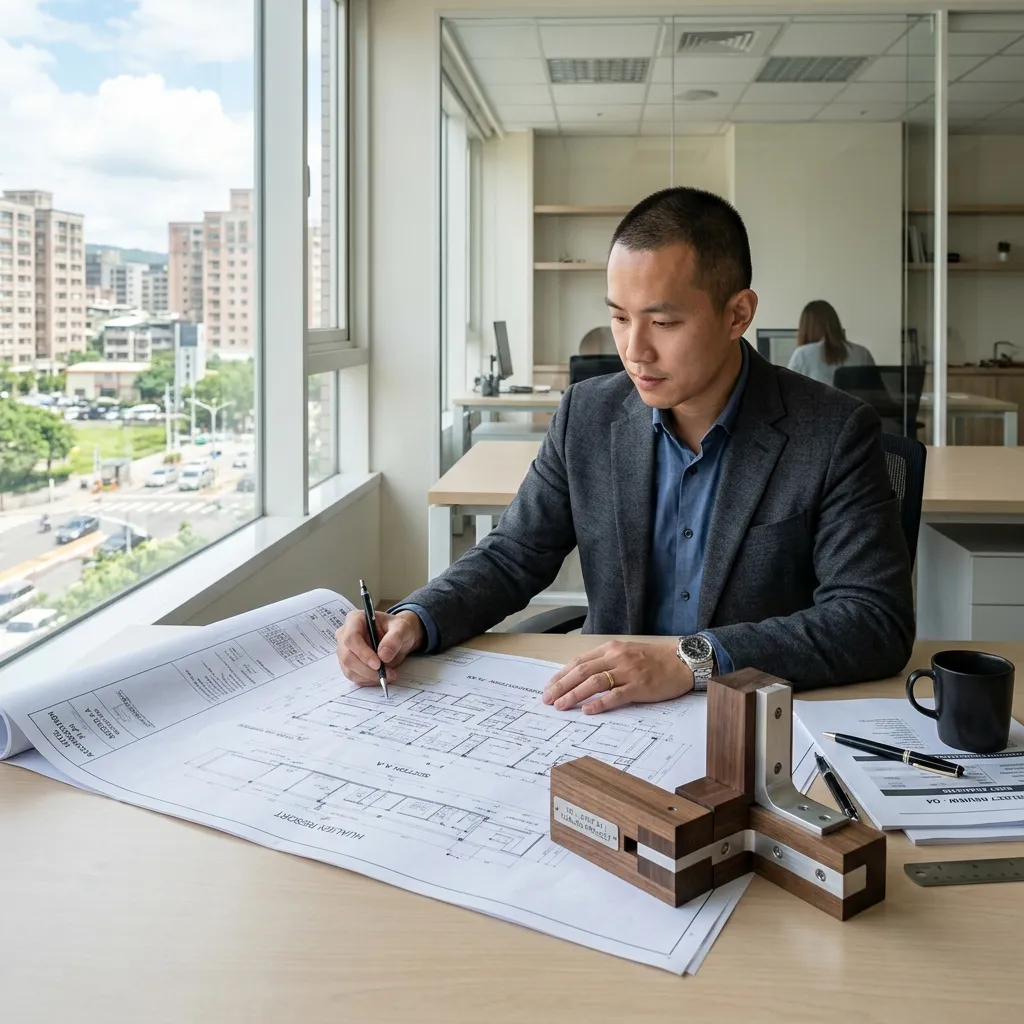
True Sunder Value Engineering (VE) occurs entirely on the interior, in structures completely invisible to the naked eye. Upon formally receiving the design blueprints, we initiate rigorous professional analysis directly on the manufacturing end. Certain highly complex geometric structures frequently require extremely high, expensive manual labor hours in outdated traditional woodworking processes; yet, by strategically and precisely tweaking a single angle at an internal hidden joint, we can instantly load it directly into industrial CNC (Computer Numerical Control) machines for flawless, automated mass production. What we aggressively save the owner is highly ineffective processing time and massive human attrition, absolutely not the vital physical durability required to withstand the severe Taiwan moisture defense standard.
The Killer of Hidden Costs: Over-Design and Redundant Hardware
To desperately guarantee perceived durability, architectural design teams sometimes specify hardware lists flooded with “over-engineered specifications” for purely internal structures. For example, explicitly specifying heavy-duty, premium German hinges with a massive 100,000-cycle lifespan on a decorative, concealed electrical door that rarely, if ever, needs to be opened. In pure engineering, this is undeniably called “ineffective redundancy.”
Our technical asset management team methodically audits and recalculates the true stress frequency and physical operational environment of all specified concealed hardware. For extreme load-bearing commercial zones, we absolute insist on top-tier, bulletproof hardware; but for entirely static or ultra-low-frequency operational zones, we proactively propose high-quality industrial-grade alternatives that perfectly meet the exact physical requirements of that specific area. This data-driven, mathematically precise load reduction can instantly save extremely substantial initial CapEx on a massive project spanning hundreds of guest rooms.
Calculating Maintenance Yield: Forecasting Future Operational Attrition
The most exorbitantly expensive commercial furniture is undeniably the furniture that constantly requires shutting down highly profitable guest rooms for repairs during live operations, ballooning Operational Expenditure (OpEx).
During the rigorous physical prototype evaluation phase, our VE team simultaneously submits precise “Attrition Forecast Parameters.” If a particular architectural design is mathematically highly prone to creating un-cleanable, dirt-trapping crevices in future operations, we mandate aggressively modifying the microscopic trimming angles, thereby permanently maximizing daily housekeeping efficiency. For sharp corners statistically highly susceptible to violent destruction by heavy luggage impacts, we preemptively establish hidden anti-collision modules or “easily replaceable panels.”
What truly safeguards the financial health of the asset is not just aggressively suppressing the one-off manufacturing CapEx, but maximizing the hotel’s uninterrupted operational yield over the next decade and executing the extreme, relentless compression of overall TCO friction.
Technical Glossary
- TCO (Total Cost of Ownership): Encompasses not just the initial purchase price (CAPEX), but also the hidden operational costs (OPEX) including installation, maintenance, cleaning, and eventual replacement. Sunder minimizes TCO through extreme engineering.
- FF&E (Furniture, Fixtures & Equipment): All movable furniture and equipment within hospitality and commercial projects. We focus on the durability and asset lifecycle management of FF&E.
- VE (Value Engineering): Achieving the optimal cost-benefit ratio through process optimization and material substitution without sacrificing design aesthetics or structural integrity.