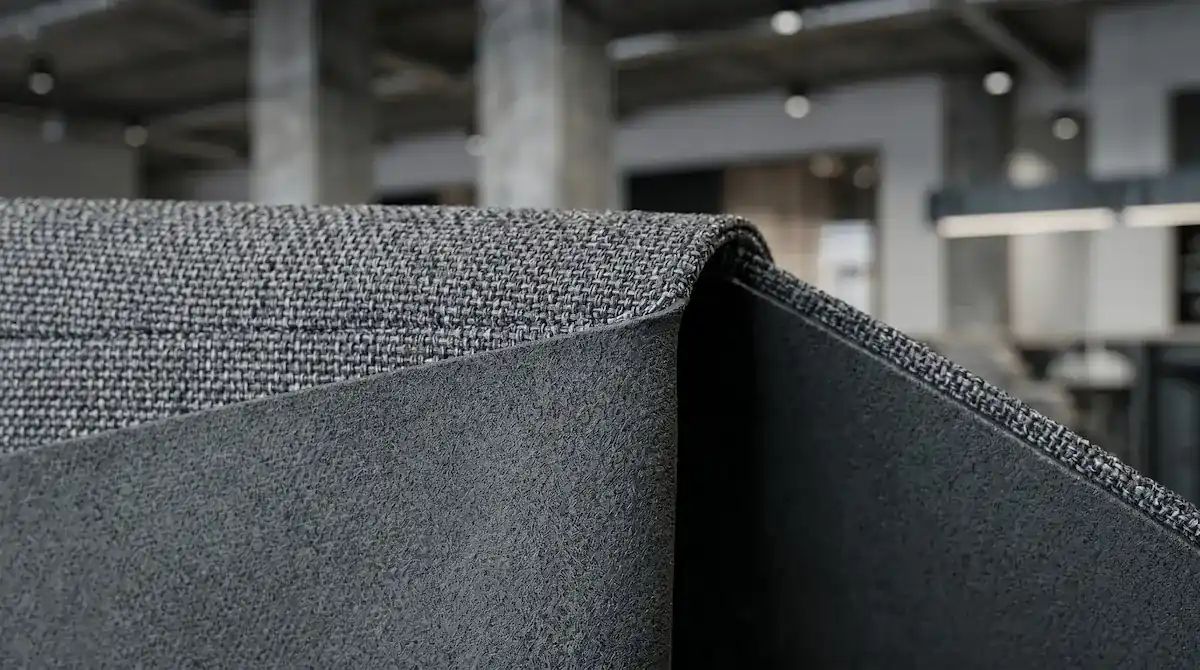
The problem with flame-retardancy paperwork is rarely that it is missing. It is what the paperwork covers. Suppliers usually hand over a test report for the fabric on its own; fire officers and brand auditors want the result for the assembled composite — fabric, interliner and foam burned together. BS 7176 separates those two things deliberately, and only the second one describes the sofa that will actually stand in the room.
During conventional B2B procurement strategies and low-bid tendering, suppliers frequently specify standard residential textiles coated with cheap “topical chemical fire-retardant sprays”. However, in subtropical high-humidity environments () under daily friction, these topical chemicals hydrolyze and flake off within 6 to 12 months, rendering flame resistance virtually zero. When fire authorities conduct mandatory random audits, failed tests trigger statutory closure orders, millions in daily Out-of-Order (OOO) room revenue losses, and uninsurable statutory and criminal liability.
Sunder integrates B2B Value Engineering (VE) and Combustion Thermodynamics, engineering contract upholstery to British BS 7176 Medium Hazard (Crib 5), European EN 1021-1/2, and Taiwan CNS 13590 standards utilizing Trevira CS inherent flame-retardant fibers and CMHR foam to construct a 10-year, non-degrading life safety defense.
1. Crib 5 Wood Crib Combustion Thermodynamics & Heat Release Rate (HRR) Model
BS 7176 Medium Hazard requires upholstered furniture composites to pass BS 5852 Source 5 (Crib 5 Wood Crib Test):
+-------------------------------------------------------------------------+
|                  BS 5852 Crib 5 Testing Rig Configuration               |
+-------------------------------------------------------------------------+
|     ┌─────────────────────────────────────────────────────────────┐     |
|     │                                                             │     |
|     │             ┌───────────────┐                               │     |
|     │             │ Pinewood Crib │ ➔ 20 Scots pine sticks        │     |
|     │             │ (Crib 5)      │ ➔ 1.4 ml propan-2-ol ignition │     |
|     │             └───────┬───────┘ ➔ Generates 5.2 kW heat (850°C)│    |
|     │                     │                                       │     |
|     │        ╭────────────┴────────────╮                          │     |
|     │      ╭╯                           ╰╮                        │     |
|     │     ┌───────────────────────────────┐                       │     |
|     │     │ Test Specimen: Fabric+Liner+CMHR│                      │     |
|     │     └───────────────────────────────┘                       │     |
|     │                                                             │     |
|     │  [Pass Standard: Complete self-extinction within 10 minutes /│     |
|     │   Zero damage penetrating beyond specimen perimeter edges]  │     |
|     └─────────────────────────────────────────────────────────────┘     |
+-------------------------------------------------------------------------+
+-------------------------------------------------------------------------+
| Topical Chemical Spray vs. Sunder 4-Tier Inherent FR Armor |
+-------------------------------------------------------------------------+
| 【Low-Bid Topical Spray (Hydrolysis & Degradation Trap)】 |
| Standard fabric + chemical spray ──► Hydrolyzes in 6 months ➔ Fire risk|
| |
| 【Sunder 4-Tier Inherent Commercial FR Architecture】 |
| ┌─────────────────────────────────────────────────────────────────┐ |
| │ Layer 1: Trevira CS Inherent FR Textile (Phosphorus copolymer) │ |
| ├─────────────────────────────────────────────────────────────────┤ |
| │ Layer 2: Aramid/Carbon Fiber Thermal Barrier (FR Interliner) │ |
| ├─────────────────────────────────────────────────────────────────┤ |
| │ Layer 3: CMHR High-Resilience Foam (Density >=45kg/m³, Melamine)│ |
| ├─────────────────────────────────────────────────────────────────┤ |
| │ Layer 4: Kevlar High-Temp Non-Melting Sewing Thread (450°C Melt)│ |
| └─────────────────────────────────────────────────────────────────┘ |
+-------------------------------------------------------------------------+2. Global Commercial Fire Safety Standard Comparison Matrix
Global Commercial Upholstery Fire Standards Comparison Matrix
| Standard / Code | Ignition Source & Criteria | Space Classification |
|---|---|---|
| European EN 1021-1 | Smouldering Cigarette | Low Hazard (Offices) |
| European EN 1021-2 | Match Flame (15s butane) | Medium Hazard (Htl) |
| British BS 7176 Medium | Crib 5 Wood Crib (5.2 kW) | 5-Star Hotel Suites |
| US CAL TB 117-2013 | Smoulder Resistance Matrix | US Hospitality Brands |
| Taiwan CNS 13590 | Grade-1 Fire Retardancy | Statutory Code Pass |
All custom armchairs, sofas, and upholstered headboards manufactured by Sunder hold dual BS 7176 Medium Hazard (Crib 5) and CNS 13590 Grade-1 certifications, ensuring 100% compliance during statutory building inspections.
3. 4 Core Inherent Fire-Retardant Engineering Standards
Sunder locks fire-retardant properties into the molecular backbone of materials:
1. Inherent Permanent FR Fiber (Trevira CS)
- Formulated with German-engineered Trevira CS modified polyester fibers, bonding organophosphorus flame-retardant comonomers directly into the polymer chain.
- Withstands hundreds of commercial washings and sanitizations without flame degradation, maintaining a Limiting Oxygen Index (well above atmospheric 21% oxygen).
2. High-Density Aramid Thermal Barrier Interliner
- Positioned between cover fabric and core foam, high-density aramid thermal barrier liners resist temperatures up to , shielding underlying foam from conductive heat transfer.
3. CMHR High-Density Cold-Cure Flame-Retardant Foam (Density ≥ 45 kg/m³)
- Core cushions utilize microencapsulated melamine-modified CMHR (Combustion Modified High Resilience) foam.
- Exposure to flame forms a rigid, non-toxic carbonaceous char shield that starves combustion while maintaining a compression ball rebound resilience .
4. Kevlar High-Temperature Non-Melting Sewing Thread
- Upholstery seams are stitched with high-tensile Kevlar thread rated to , preventing structural seam ruptures during thermal exposure.
4. Actuarial Quantification: 300-Key Hotel Fire Safety Compliance Audit
Actuarial fire safety risk model for a 300-key luxury hotel generating NTD 6,000 ADR:
300-Key Hotel Fire Safety Audit & Closure Risk Actuary
| Regulatory & Risk Metric | Low-Bid Topical Spray | Sunder Inherent |
|---|---|---|
| Statutory Audit Pass Rate | 40% Pass (60% Fail) | 100% Audit Pass |
| Closure Rectification Downtime | 30 Days (Full Closure) | 0 Days (Opening) |
| 30-Day Room Revenue Lost (OOO) | NT$ 40,500,000 (Lost) | NT$ 0 (Captured) |
| Emergency Re-Coating Sunk Cost | NT$ 1,800,000 | NT$ 0 |
| Regulatory Penalties & PR Crisis | NT$ 600,000+ | NT$ 0 |
| Initial Fabric Price Delta | Appears NT$ 900k Lower | Baseline |
| True Net Financial Impact | Net Loss > NT$ 42M+ | Net Revenue Win |
A low-bid supplier appearing NTD 900k cheaper leads to over NTD 42,000,000 in operational revenue losses and fines if fire inspections fail, completely obliterating initial purchasing savings.
5. Total Cost of Ownership (TCO): Topical Chemical Spray vs. Sunder Inherent FR
10-Year TCO Evaluation: Topical Chemical Spray vs. Sunder Inherent FR
| Evaluation Vector | Topical Chemical Spray | Sunder Inherent FR |
|---|---|---|
| FR Longevity | Degrades in 6 to 12 months | 10-Year Molecular |
| BS 7176 Crib 5 Proof | Fails under stress | 100% Passes Test |
| CNS 13590 Label Status | Uncertified / High Risk | Certified by Agency |
| Alcohol Wipe Resistance | Leaches out chemicals | 75% Alcohol Proof |
| 10-Year Cumulative TCO | Baseline (100% + Fines) | Reduced to 33% |
6. Conclusion: Engineering Fire Life Safety as an Fiduciary Asset Imperative
In luxury hospitality operations, fire safety compliance is a non-negotiable legal and life-safety line. A single compromised armchair that transforms from a restful haven into a combustible hazard creates severe financial and legal liabilities that no insurance policy can restore.
Sunder standardizes BS 7176 Medium Hazard (Crib 5), Trevira CS inherent fibers, and CMHR high-density foams across all contract collections. Through combustion thermodynamics and rigorous engineering, we eliminate latent regulatory risks, constructing an enduring 10-year shield for guest life safety and corporate asset integrity.