Executive Summary
Technical specs and TCO analysis for hospitality sofa beds, addressing mechanical wear and subtropical humidity defense.
Spatial Philosophy & Architectural Narrative
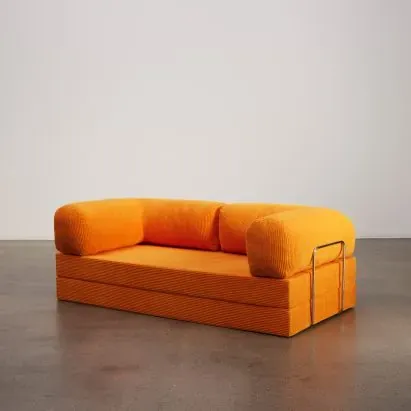
In contemporary hospitality design, the multi-functional daybed or sofa bed has evolved from a mere space-saving backup into a crucial element for optimizing spatial efficiency and enriching brand narrative. From a spatial philosophy perspective, a high-caliber daybed must seamlessly transition between daytime executive hosting and nighttime deep sleep. This dual-purpose mechanism demands careful planning of spatial circulation and guest interaction. Designers treat these loose furniture pieces as an extension of the architectural volume. Low-slung silhouettes and block-like geometric masses reduce visual clutter, allowing natural light to cast balanced shadows across the living zone. When transitioning from an open lounge layout to an intimate sleeping configuration, the furniture’s physical form and local lighting design must realign to shift the visual focus. This synthesis of FF&E and interior architecture elevates the brand’s spatial ritual, guiding guest behavior while achieving harmony between programmatic flexibility and aesthetic restraint.
Luxury FF&E Material Engineering & Joinery Breakdown
The engineering core of premium hospitality sofa beds lies in structural stability and material durability under high-frequency mechanical deformation. While domestic replicas often compromise on internal reinforcement, commercial specifications dictate that internal wood substrates must utilize Class F1 (CNS 1349 compliant) moisture-resistant, low-formaldehyde hardwood plywood. The wood moisture content must be strictly regulated within 8% to 12% to mitigate structural warping caused by internal stress release.
Hardware determines the functional lifespan of a conversion mechanism. All folding hinges and drawer slides must undergo cyclic fatigue testing compliant with EN 15372 or ANSI/BIFMA X5.4, achieving 50,000 operational cycles without structural failure. The mechanical linkages must be fabricated from heavy-duty cold-rolled steel with an anti-corrosion electroplated coating, engineered to withstand static loads exceeding 250 kg at the unsupported cantilevered edges to prevent tilting.
For metal trimming and base frame engineering, 1.2mm thick SUS304 stainless steel with a Physical Vapor Deposition (PVD) titanium finish is required to provide impact resistance against high-frequency luggage and housekeeping cart impacts. Stone backings must be reinforced with a high-density fiberglass mesh backing bonded with epoxy resin, maintaining a minimum flexural strength of 35 MPa to prevent brittle fracture.
Upholstery selection must prioritize mechanical wear and chemical resistance. Fabrics must exceed 40,000 rubs on the Martindale abrasion test with no visible pilling or thread slippage. The textile fibers must feature nanotech treatments for oil, stain, and water repellency. Fire safety standards must strictly comply with BS 5852 Source 5 (Crib 5) or BS 7176 Medium Hazard flammability specifications, limiting heat and smoke release rates to ensure maximum evacuation safety margins for international luxury hospitality properties.
Hospitality Operations, Wear Analysis & TCO Model
Asset managers must implement a Total Cost of Ownership (TCO) life-cycle calculation when planning CapEx budgets. As a high-frequency, mechanically complex room asset, a sofa bed’s operational maintenance cost often outweighs its initial procurement expense. Low-spec or uncertified furniture replicas typically fail within 2 to 3 years due to foam sagging, mechanical warp, or fabric tearing. This triggers immediate guest complaints and Room Out-Of-Order (OOO) status, directly undermining RevPAR.
Applying an 8-year TCO evaluation model (TCO = Initial Capital Cost + 8-Year Maintenance + Revenue Loss from Room Downtime), investing in engineered FF&E specifications (approx. 30% premium upfront) reduces the annual repair rate from 15% to under 2%. High-resiliency polyurethane foam (seat core density >= 45 kg/m³, backrest density >= 35 kg/m³) keeps deformation below 5% over 5 years. This durability extends the asset’s depreciation cycle and defers major CapEx renovations, delivering optimized returns on investment for institutional hospitality owners.
Sunder Engineering Grounding & Subtropical Climate Defense
The subtropical, highly humid climate of the Asia-Pacific region (averaging 75-85% RH) poses a severe challenge to wooden joinery and metal hardware. During factory fabrication, strict microclimate defense protocols must be enforced. First, all wood substrates and natural veneers must be monitored using pin-type moisture meters to ensure an equilibrium moisture content (EMC) of 8% to 10%, accommodating the thermal-moisture cycles of guestroom HVAC operations.
For assembly, a hybrid of mortise-and-tenon joints and mechanical fasteners must be deployed, with a 0.5mm to 1.0mm expansion gap to accommodate wood swelling. All wooden surfaces—both visible and concealed—must receive a 360-degree double-sided moisture-barrier sealant. Metal components must undergo a minimum of 96 hours of salt spray testing to verify corrosion resistance in humid environments. This modular factory prefabrication strategy guarantees precise quality control and shortens onsite installation schedules.
B2B Material & Inspection Specification Table
To ensure hotel FF&E procurement meets exact engineering standards, a standardized material and inspection specification table must be implemented. QA/QC inspectors should utilize this framework during Factory Acceptance Testing (FAT) and Site Acceptance Testing (SAT).
| Component | Specification | Inspection Standard | Tolerance & Criteria |
|---|---|---|---|
| Internal Wood Substrate | Class F1 moisture-resistant plywood, 360° moisture sealant | CNS 1349 / ISO 12460 | Moisture content: 8% - 12%, Formaldehyde ≤ 0.3 mg/L |
| Folding Hardware | Cold-rolled steel, electroplated, with soft-close dampers | EN 15372 / ANSI BIFMA X5.4 | 50,000 cycles with zero warp, hinge tolerance ≤ 0.5 mm |
| Seat Cushion Foam | High-resiliency flame-retardant molded polyurethane | ASTM D3574 | Seat density ≥ 45 kg/m³, 5-year indentation loss ≤ 5% |
| Upholstery Fabric | Nanotech stain-resistant flame-retardant textile | Martindale / BS 7176 | Wear resistance ≥ 40,000 rubs, BS 5852 Crib 5 compliant |
| Metal Base / Trim | SUS304 stainless steel with PVD titanium coating | ASTM A480 | Thickness ≥ 1.2 mm, diagonal tolerance ≤ 1.0 mm |
During final inspection, mechanical calipers must verify critical dimensions, and suppliers must submit third-party laboratory test reports certified by ILAC-MRA to verify compliance before project sign-off.