Executive Summary
Addressing the challenges of custom timber joinery in high-traffic hospitality spaces, this paper details material selection, structural design, and lifecycle
Spatial Philosophy & Architectural Narrative
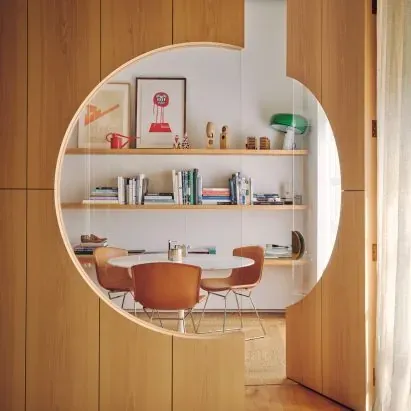
The spatial philosophy of a top-tier luxury hospitality project hinges on creating a distinctive narrative through precise architectural massing and circulation. Custom timber joinery, such as curved walls or integrated shelving, serves not merely as a visual feature but as an extension of spatial fluidity. For multi-functional venues accommodating private events and guest stays, the design must balance aesthetic appeal with operational flexibility. Natural light and artificial illumination are paramount; precisely angled windows can draw light deep into interiors, while concealed lighting softens edges and highlights material textures. The interplay of light on timber grain becomes a crucial element of sensory experience. Beyond logos and color palettes, brand identity is deeply embedded in FF&E material choices, design language, and craftsmanship. The selected wood species and its finish, for instance, must resonate with the brand’s desired ethos—be it understated elegance, sophisticated modernity, or classic luxury. Space planning, whether for intimate meeting zones or expansive exhibition corridors, requires a cohesive flow, connecting furniture arrangements, wall features, and ceiling lines into a rich, unified visual statement. This design philosophy, from macro layout to micro detail, aims to forge an immersive brand experience that transcends mere accommodation for the discerning guest.
Luxury FF&E Material Engineering & Joinery Breakdown
The material engineering and joinery craftsmanship of premium FF&E are pivotal for both aesthetic luxury and long-term durability. For wood substrates, specifying F1-grade moisture-resistant low-formaldehyde plywood compliant with CNS 2215 is critical. This material choice effectively resists humidity in subtropical island climates, minimizing warping and ensuring indoor air quality. Real wood veneer applications should be at least 0.6 mm thick to allow for future sanding and repair, complemented by multi-layer clear coat finishes achieving a hardness and abrasion resistance comparable to JIS A 6909 standards. Edge banding should utilize PUR hot-melt adhesive for stable bonding in high-temperature, high-humidity environments, with edge tolerances controlled within ±0.2 mm. For hardware, hinges must pass a minimum of 200,000 open-close cycle tests (per EN 15338 or ANSI/BHMA A156.9) to ensure longevity under high-frequency use. Drawer slides and sliding door mechanisms require heavy-duty runners with a load capacity exceeding design specifications by 20% and must endure at least 50,000 open-close cycles. Metal trim should be PVD titanium-coated stainless steel, offering surface hardness exceeding HV 2000. This provides superior scratch and corrosion resistance compared to traditional electroplating, maintaining color stability even with frequent cleaning and sanitization in hospitality settings. Natural stone countertops or wall panels must be reinforced with a fiberglass mesh backing (or aluminum honeycomb panel) to distribute stress, mitigating the risk of cracking due to thermal expansion/contraction or external impact. Stone surfaces should also be treated with a penetrating sealer offering at least 5 years of stain protection. Fabric selection for upholstery requires high Martindale abrasion resistance, with public area seating fabrics rated at 40,000 cycles or more, and carpets at 50,000 cycles. Furthermore, fabrics must meet BS 7176 Medium Hazard, Crib 5 flame retardancy standards for safety. All wiring and internal electrical components must comply with UL 20257 or IEC 60332-1-2 electrical safety standards and possess fire-resistant properties. Overall structural design must account for material expansion and contraction; flexible sealants should be used at junctions between disparate materials to absorb stress and prevent cracking. Complex timber joinery, such as mortise and tenon, requires precise stress distribution calculations and the use of structural adhesives for enhanced rigidity and durability.
Hospitality Operations, Wear Analysis & TCO Model
From a hotel operator’s perspective, FF&E selection is not solely an initial investment but a critical factor influencing operational costs and asset value over a 5-10 year lifecycle. Furniture in guest rooms and public areas endures high-frequency use and wear. Common impact points include baseboards near room entrances, wall protection panels in corridors, reception desk corners, guest room desk and dining table edges, and armrests and upholstery on various seating. Using substandard materials or inadequate design in these areas leads to frequent repairs and replacements, significantly inflating operational expenditures (Opex). Developing a forward-looking Total Cost of Ownership (TCO) model is therefore crucial. This model should integrate initial capital expenditure (CapEx) with projected maintenance, cleaning, energy consumption (e.g., lifespan and efficiency of lighting fixtures), and replacement costs. For instance, choosing upholstery fabrics with a Martindale rating of 40,000 cycles or more, despite a higher upfront cost, extends the replacement cycle to 5-7 years, substantially reducing long-term total costs compared to 15,000-cycle fabrics requiring annual replacement. Similarly, structurally robust timber joinery with a finish hardness of 2H effectively resists daily scratches and impacts, minimizing frequent touch-ups or refinishing. Maintenance plans should be formalized, including annual comprehensive tightening inspections for all loose furniture, semi-annual localized repair or waxing for timber surfaces, and quarterly professional cleaning for upholstery. By prioritizing preventive maintenance over reactive repairs, the service life of FF&E is extended, ensuring assets remain in excellent condition. A robust TCO defense model not only optimizes budget allocation but also safeguards consistent guest experience and preserves brand image, preventing asset depreciation due to aging or damaged furnishings.
Sunder Engineering Grounding & Subtropical Climate Defense
For FF&E manufacturing in the high-temperature, high-humidity subtropical island climates prevalent in Asia-Pacific, precise factory execution and quality control are paramount. Environments with perennial relative humidity ranging from 75-85% pose significant challenges to timber stability. Accurate moisture content control is critical; all wood substrates (solid wood or plywood) should be acclimated in a climate-controlled environment upon factory arrival, ensuring their moisture content is consistently maintained between 8-12%. Exceeding this range will lead to wood expansion or contraction, causing structural deformation or surface cracking. For moisture defense, all six faces of timber components, especially cut edges and concealed surfaces, must undergo double-sided moisture-sealing treatment to maximize humidity barrier performance. Utilizing primers and topcoats with moisture-resistant formulations creates an effective physical barrier. For solid wood elements, particularly joinery, minute stress-relief gaps must be incorporated during design and fabrication. This allows the wood to subtly expand and contract with humidity fluctuations without generating internal stress concentrations, preventing cracking or warping. Modular prefabrication strategies offer significant advantages in factory production. Deconstructing complex furniture units into standardized, independently produced modules—such as separating headboards from bed frames or wardrobe interiors from outer shells—facilitates precise quality control and batch production in the factory. This also substantially reduces on-site installation time and minimizes the impact of site humidity and environmental conditions on the finished product. Modular manufacturing further optimizes packaging and transportation efficiency, reducing damage risks during logistics. Each module should undergo pre-assembly testing before leaving the factory to ensure all tolerances meet design specifications and are clearly labeled for installation. Strict humidity and temperature control within the factory, rigorous material moisture content verification, multi-layer moisture-resistant coatings, and modular production processes are fundamental to ensuring the long-term stability of FF&E in island climates.
B2B Material & Inspection Specification Table
Professional B2B procurement and acceptance must follow clear material and inspection standards to ensure FF&E quality and durability. Below are specifications and acceptance criteria for common components:
| Component | Specification | Inspection Standard | Tolerance & Criteria |
|---|---|---|---|
| Wood Substrate | CNS 2215 F1 grade moisture-resistant plywood, MC 8-12% | CNS 2215, ASTM D4442 | Flatness ±0.5 mm/m, formaldehyde release ≤ 0.3 mg/L |
| Surface Finish | Polyurethane (PU) topcoat, film hardness ≥ 2H | JIS A 6909 (abrasion/scratch), ASTM D3359 (adhesion) | Even color, adhesion 5B, abrasion ≥ 1000 cycles (CS-10 wheel) |
| Metal Trim | PVD titanium-coated SUS304 stainless steel, film thickness ≥ 0.8 µm | ASTM B117 (salt spray), ASTM D3359 (adhesion), ISO 2819 (hardness) | No scratches/color deviation Delta E < 2.0, adhesion 5B, pencil hardness ≥ 9H |
| Upholstery Fabric | Martindale abrasion ≥ 40,000 cycles, flame retardant BS 7176 Crib 5 | BS EN ISO 12947-2, BS 7176 | No color variation, uniform weave, abrasion test passed, flame retardancy compliant |
| Stone Countertop | Natural stone with fiberglass mesh backing, penetrating stain protector | ASTM C97, ASTM C880 (flexural strength) | Surface flatness ±1.0 mm/m, no cracks, stain protection effective |
| Hardware Hinge | Stainless steel, passed 200,000 open-close cycle test | EN 15338 (durability), ANSI/BHMA A156.9 | Smooth operation without abnormal noise, no looseness, corrosion level < Ry3 |
During acceptance, particular attention should be paid to surface flatness, color consistency, and assembly tolerances between components. All incoming materials must be accompanied by original material certificates and test reports to ensure compliance with tender specifications. On-site sampling inspection is an indispensable part of the acceptance process. For specific items such as wood moisture content, film thickness, and metal plating, it is advisable to use professional instruments for measurement, rather than relying solely on visual judgment.