Executive Summary
Engineering standards for high-traffic dining FF&E, addressing joinery fatigue, moisture defense, and long-term TCO.
Spatial Philosophy & Architectural Narrative
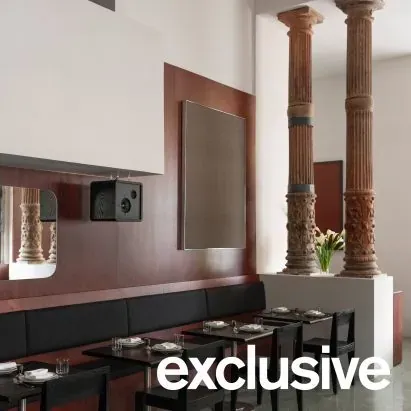
Repurposing residential heritage structures into high-traffic dining venues demands rigorous architectural discipline. As demonstrated by Formant Studio’s Nota Tavern in Mexico City’s Escandón district, classic Chicago tavern elements are recontextualized within a former hacienda framework. The two-storey floor plan strategically orchestrates guest circulation from a high-impact bar on the ground floor to subdued dining suites above.
Warm indirect illumination modulates visual density while highlighting tailored millwork modules against restored load-bearing walls. Operationally, the configuration resolves peak-hour bottlenecks by calibrating service corridors to a minimum clear width of 1,200 mm. The design philosophy anchors the commercial narrative in authentic structural textures, ensuring that the dialogue between regional heritage and mid-century tavern identity withstands heavy operational volumes.
Luxury FF&E Material Engineering & Joinery Breakdown
Commercial hospitality FF&E requires strict adherence to physical performance parameters under constant dynamic stress. Case goods and booth framework utilize structural plywood meeting EN 314-2 Class 3 exterior bonding and low-formaldehyde emission thresholds (≤ 0.3 mg/L). Exposed surfaces feature 0.6 mm quarter-cut hardwood veneer finished with a three-layer polyurethane coating system, achieving surface pencil hardness above 3H.
Concealed hinges conform to DIN EN 15570 Level 3, certified for 200,000 operational cycles under load. Drawer glides are heavy-duty concealed undermount slides certified under ANSI/BIFMA X5.5, handling 45 kg dynamic loads across 50,000 cycles with vertical deflection under 0.8 mm.
All metallic trims and footrests employ SUS304 stainless steel coated via Physical Vapor Deposition (PVD) titanium at 0.3 to 0.5 μm thickness, withstanding ASTM B117 neutral salt spray tests for over 480 hours. Stone countertops utilize 20 mm natural marble backed by an epoxy-impregnated alkali-resistant fiberglass mesh and an 18 mm structural aluminum honeycomb substrate to absorb dynamic deflection.
Upholstery fabrics exceed 50,000 rubs under the Martindale method (ISO 12947-2). Cushioning cores specify high-resilience polyurethane cold-cure foam (density 45 to 50 kg/m³) certified to BS 7176 Medium Hazard and BS 5852 Crib 5 flammability standards, ensuring less than 4.5% indentation loss after prolonged cyclic compression.
Hospitality Operations, Wear Analysis & TCO Model
From an asset management perspective, initial capital expenditure (CapEx) directly controls downstream operational expenditure (OpEx). Hospitality environments subject high-contact zones—seat skirts, counter baseboards, and armrest fronts—to continuous abrasion and service cart impacts. Specifying standard residential grade FF&E leads to premature wear within 18 to 24 months, resulting in disruptive off-cycle replacements and lost table turns.
A structured Total Cost of Ownership (TCO) strategy shifts budget allocation toward failure prevention. Implementing SUS304 kick-plates, R3 corner easing on exposed joinery, and underside structural tension rods extends the operational life cycle from 3 to 8 years.
Financial modeling for a 120-seat hospitality venue demonstrates that an initial 15% CapEx premium on certified materials reduces annualized routine maintenance expenditure by over 60%, capping repair costs under 2.5% of total asset replacement value. This discipline stabilizes cash flow across the standard 5-to-7-year hotel CapEx cycle.
Sunder Engineering Grounding & Subtropical Climate Defense
In subtropical and island climates characterized by ambient relative humidity between 75% and 85%, moisture management dictates millwork integrity. Differential moisture absorption causes veneer delamination, panel warping, and joint separation. Production protocols must calibrate timber equilibrium moisture content (EMC) strictly within 8% to 12% via climate-controlled acclimatization chambers.
All veneered architectural panels must apply the balanced construction rule: backing faces receive balance sheets of identical thickness or full polyurethane balancing coats to counteract hygroscopic warping forces. Linear spans exceeding 2,400 mm require integrated 2.0 mm movement joints and interlocking aluminum French-cleat mounting assemblies to decouple woodwork from substrate moisture.
Off-site modular fabrication maximizes durability. CNC precision machining prepares joints, pre-inserts heavy-duty hardware, and completes six-sided moisture sealing prior to dispatch. Dry-fit on-site installation accelerates turnover by 30% while maintaining dimensional stability under severe climatic shifts.
B2B Material & Inspection Specification Table
Quality control within high-traffic hospitality spaces relies on transparent material verification. The following specification matrix establishes clear performance thresholds, standard test methods, and on-site tolerance benchmarks for commercial procurement:
| Component | Specification | Inspection Standard | Tolerance & Criteria |
|---|---|---|---|
| Substrate Panels | Grade F1 low-formaldehyde marine plywood, 6-sided PU coat | CNS 1349 / EN 312 | Formaldehyde ≤ 0.3 mg/L, planarity tolerance ±0.5 mm/m |
| Joinery Hardware | Heavy-duty adjustable concealed hinges, soft-close slides | DIN EN 15570 / ANSI BIFMA X5.5 | 200,000 operational cycles, slide capacity 45 kg |
| Metal Trims | SUS304 stainless steel with hairline PVD titanium coat | ASTM B117 / ISO 1456 | Layer 0.3-0.5 μm, salt spray exposure 480 h without corrosion |
| Stone Countertops | 20 mm natural stone reinforced with epoxy mesh & honeycomb | ASTM C880 / ASTM C99 | Flexural strength ≥ 12 MPa, joint alignment offset ≤ 0.3 mm |
| Upholstery & Foam | Martindale-rated commercial textile, high-resilience foam | ISO 12947-2 / BS 7176 Medium Hazard | Abrasion ≥ 50,000 cycles, compliant with BS 5852 Crib 5 |
Compliance requires certified laboratory documentation per batch, with field verification performed via optical gauges and dial indicators before sign-off.