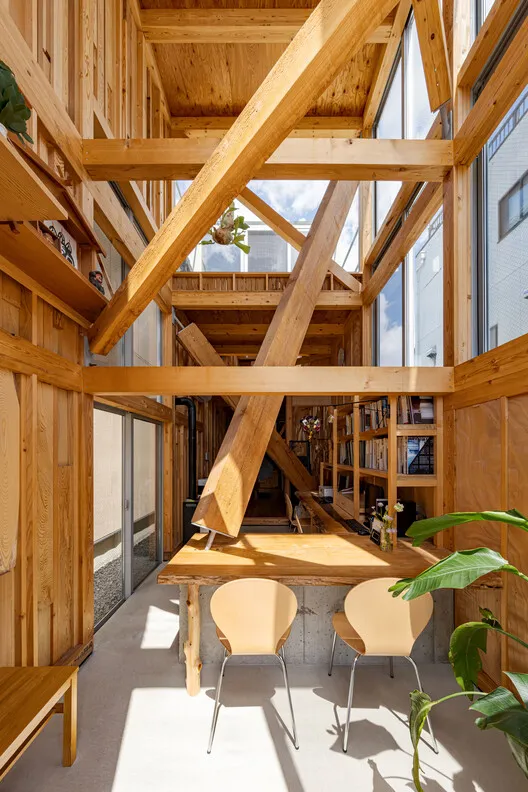
Executive Summary
Discover how a 50-year-old construction company transforms its inherited surplus timber into a captivating design narrative for its new office and residence, redefining sustainable architectural practice.
Analytical Insights
- Explores the unique challenge faced by a 50-year-old Nagoya construction company: effectively integrating their extensive, inherited stockpile of unused timber into the design of their new office and residence.
- Highlights this project as not merely a functional building, but a tangible practice of the circular economy, elevating dormant surplus and reclaimed lumber into design elements rich with historical narrative and environmental consciousness.
- Drawing insights from this case, examines the prevalent issue of dormant timber stockpiles within Japan's construction industry, advocating for innovative approaches to transform these "sleeping assets" into opportunities for future design and value creation.
Further Reading
- Zeroing Out Operational Friction: Hotel Furniture Procurement Strategies to Reduce Ineffective Labor in Housekeeping and Maintenance
- Invisible Steel Frameworks: Structural Reinforcement and TCO Security Defense in Hotel Furniture Procurement
- Logistics and Landed Cost Calculation: TCO Defense Strategies in Cross-Border Hotel Furniture Procurement | TCO